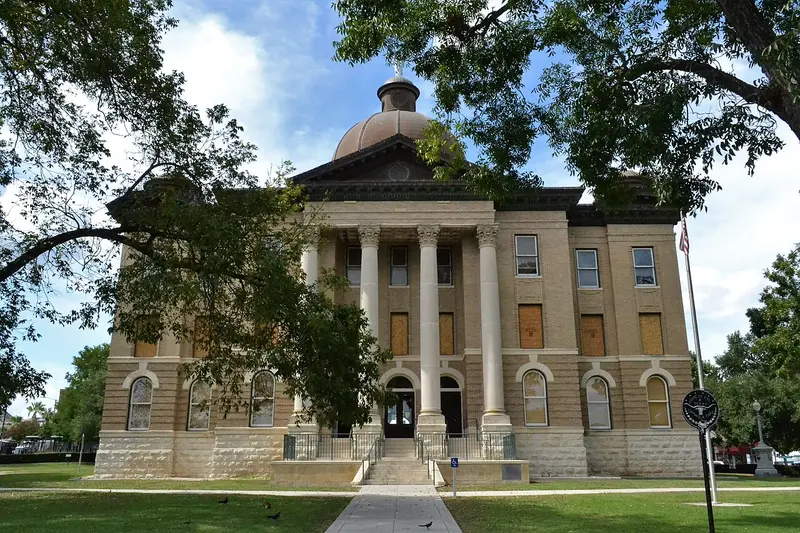
If you are handling your own divorce, custody or child support case in Hays County, you may have already asked a chatbot to draft a petition or explain what a "conservator" is. Here is where AI tools help, where they quietly cause damage, and what Hays County courts require when AI is used.
Why people turn to a chatbot first
The reasons make sense. Lawyers cost money, court forms are confusing, and a chatbot answers at midnight, for free, in English or Spanish. When you are worried about your children or your home, an instant answer feels like relief. But a chatbot predicts words that sound right. It does not check your court's rules, confirm that a case is real, or know your family beyond what you typed.
When the chatbot invents the law, you own the mistake
AI tools regularly produce court cases that never existed, with realistic-looking citations. Under Texas Rule of Civil Procedure 13 and Chapter 10 of the Civil Practice and Remedies Code, the person who signs a pleading or motion is certifying that it has a proper basis in law and fact. Those duties apply to "parties" and to "the signatory," which includes people who represent themselves. If an AI-written filing turns out to be groundless, the sanctions fall on you, not the software.
Texas appeals courts are already seeing this:
- In Suday v. Suday (Tex. App.—San Antonio, Jan. 2026), the court could not find nearly any of the cases a self-represented party cited, said she may have used an AI tool, and warned that these tools "lack the ability to produce reliable and accurate citations to legal authorities."
- In a 2026 Houston family appeal, In re Interest of S.M.T., a brief quoted passages that do not appear in the real cases it cited. The court assumed AI was the cause and ordered the attorney who filed it to take training on AI in court filings.
- Another Houston appeals court dismissed a self-represented party's appeal after repeated briefs with "partially fabricated" citations, noting that self-represented litigants are held to the same standard as lawyers.
The Texas Supreme Court has also proposed rewriting Rule 13 so that signing a filing would mean you verified that its citations, quotations and holdings are not fabricated (Misc. Docket No. 26-9054, June 2026). As of November 2026, that change is still a proposal and has not taken effect.
Hays County has its own AI rules
The Hays County district courts and the Family Court of Hays County, where most divorce and custody cases here are heard, have their own local rules. They are not the same as the rules in neighboring counties, even where judges are shared, so do not rely on something you read about another county.
Hays County District Courts, Local Rule 1.6, "Certification Regarding Use of Artificial Intelligence" (local rules effective August 21, 2024). The rule covers self-represented litigants and attorneys "who utilize any form of artificial intelligence for legal research or drafting." Before filing, they must certify in writing that all AI-generated content, "including all language, quotations, sources, citations, arguments, and legal analysis," was "verified as accurate through traditional (non-AI) legal sources by an attorney licensed to practice law in the State of Texas," and that they "will be held responsible and subject to possible sanction."
Note two things. The certification is triggered by using AI; it is not described as a form for every pleading. And the rule's wording refers to verification by a Texas-licensed attorney even though it also names self-represented litigants. If you used AI and have no lawyer, read the current rule and ask a lawyer how it is applied before you file.
Hays County Courts at Law, Local Rule 1.07 (adopted July 29, 2025) has a similar certification when AI is used. Its version asks that AI content be verified "through traditional (non-AI) legal sources" without the attorney language. In family cases, the Courts at Law follow the District Courts' family-law local rules.
No AI note-takers in remote hearings. An August 2026 administrative order of the Hays County Courts at Law (O-12-006) prohibits recording remote or hybrid proceedings, expressly including third-party AI note-taker apps and automated transcription bots. Violations can mean losing access to the hearing and contempt, with penalties of up to $500 and/or six months in jail per violation. Turn those tools off before joining a Zoom hearing.
(A separate 2026 Courts at Law order on AI disclosure targets probate and guardianship filings, not family cases.)
Local rules and orders take effect once they are posted on the Texas Office of Court Administration local rules site, which is the place to read the current text.
Texas words a chatbot often gets wrong
AI answers often come from other states or outdated pages. Texas is different:
- "Custody" is conservatorship in Texas. Orders divide rights and duties, name who designates the child's primary residence, and set a possession schedule. See our child custody page.
- Possession schedules have been updated. Our possession schedule calendar shows the current standard schedule.
- Child support follows Texas guidelines Try our Texas child support calculator.
- Texas has no "legal separation."
- "Alimony" is limited. Court-ordered spousal maintenance in Texas has strict eligibility, amount and time limits. See spousal maintenance and alimony in Texas.
- Texas is a community property state, and property is divided in a way the court finds "just and right," which is not automatically 50/50. See property division in a Texas divorce.
The local steps no chatbot will mention
A chatbot also will not know how cases move through the Hays County courthouse:
- The Hays County Standing Order must be attached to divorce and custody petitions and binds both parties from the day the case is filed.
- Hays County's local rules include a parenting seminar for divorcing parents of minor children and financial information statements before contested support hearings.
- Filing fees, service costs and fee waivers are covered on our Hays County divorce filing fees page.
- Most divorces cannot be granted until 60 days after filing, and an answer is usually due by 10:00 a.m. on the Monday after 20 days from service. See responding to a divorce petition.
Your chats may not stay private
A chatbot is not your lawyer, so attorney-client privilege does not cover what you type. Whether AI chats can be demanded in a lawsuit is unsettled: in 2026, federal courts outside Texas reached different results, and none of those rulings bind Texas courts.
Assume anything you type could someday be seen by others. Leave out names, your children's details, account numbers, medical information and anything the other side sent you in the case.
Agreeable, absent, and sometimes inflammatory
Chatbots tend to agree with whoever is typing, so you get validation instead of the hard questions a judge will ask. A chatbot cannot appear in court, object to evidence or cross-examine a witness. And AI-polished texts to a co-parent can read as cold or combative, and those messages often become exhibits.
If you use AI anyway: a short checklist
- Use it for vocabulary, organizing a timeline, or listing questions for a lawyer, not for advice about your case.
- Check every statute against the official Texas statutes website, and confirm any case actually exists and says what the chatbot claims.
- For simple agreed cases, start from the free, Texas Supreme Court-approved forms at TexasLawHelp.org instead of a chatbot draft.
- If you used AI for research or drafting, read Hays Local Rule 1.6 (or Courts at Law Rule 1.07) and comply before filing.
- Keep private and identifying information out of the chat.
- Have a person who knows Texas family law review anything important before it is filed or signed.
Questions people ask about AI and family court
Is it illegal to use ChatGPT to write my divorce papers?
No. Hays County courts do not ban AI for drafting. But if you use AI for legal research or drafting, Hays District Courts Local Rule 1.6 and Courts at Law Rule 1.07 call for a written certification, and you are responsible for everything in what you sign and file.
Does Hays Rule 1.6 mean I have to hire a lawyer if I used AI?
The rule says AI content must be "verified as accurate through traditional (non-AI) legal sources by an attorney licensed to practice law in the State of Texas," and it also names self-represented litigants. It does not say in so many words that you must hire a lawyer. Read the current rule and ask how it is applied in your court before you file.
Can I use an AI app to take notes during my Zoom hearing?
Not in the Hays County Courts at Law, whose 2026 order bans AI note-takers and transcription bots in remote and hybrid hearings. In any court, do not record a proceeding unless the judge allows it.
What happens if my filing cites a case that doesn't exist?
The court may disregard or strike the filing and can sanction whoever signed it, lawyer or not. It can also hurt your credibility with the judge.
Can my ex get copies of my chatbot conversations?
Possibly. The law is unsettled, and courts outside Texas have disagreed. Treat anything you type as something that could be seen later.
Get a second set of eyes before you file
AI cannot tell you whether your papers will hold up in a Hays County courtroom. If you want a person to look over your case, call {{phone}} or contact us to schedule a free consultation with Attorney Jesus R. Lopez, in English or Spanish.
Have questions about your situation? Talk with a San Marcos divorce lawyer. Consultations are free, by phone or in person, in English or Spanish.
Related guides
This article is general information about Texas law, not legal advice for your situation. Laws change, and every case is different.